Quick links

Showing posts with label Development. Show all posts

Optimize for independence

When my son was born I heard often that our children, children with Down syndrome, learn what other children are learning, but at a slower pace. Be patient, give them time. We would hear that often enough, in various support groups when talking to other parents. I'm not going to lie, I loved hearing it. It gave me hope at a time when I needed a lot of encouragement. I started saying the same, to friends, my parents, everyone asking about my son's developmental prospects. I started to believe it.

And it seemed to be true. It took him longer to walk, but he did it. It took him longer to speak, but he did it. It took him longer to count, but he did it. You get the idea.
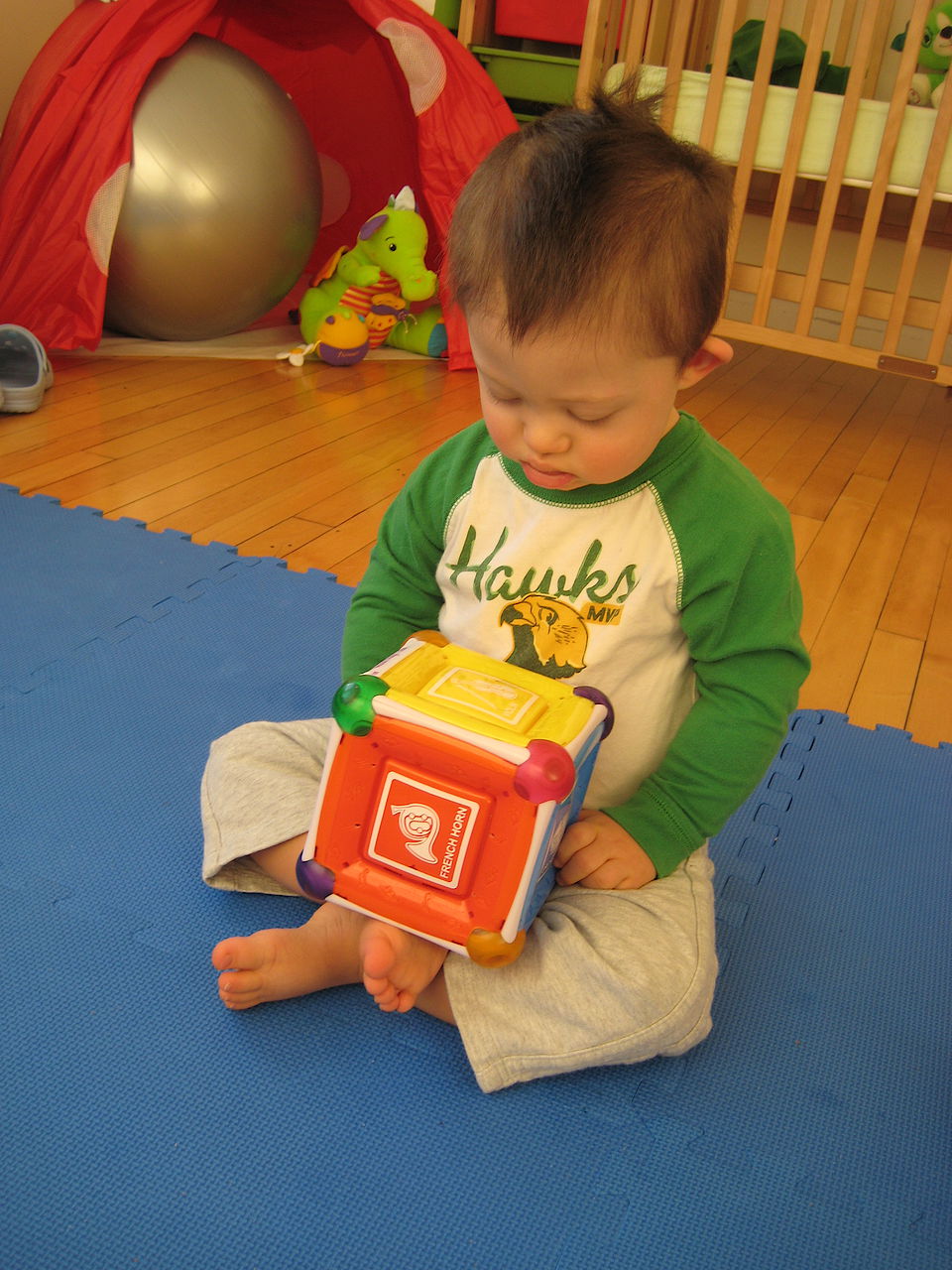

I wanted to teach him everything. I wanted the school to teach him everything. I still do, but he is 12 right now and I start to understand that some things are essential, while others are just nice to have. I started thinking about priorities for my kid. You see, math is not the goal. Reading is not the goal. Inclusion is not the goal. The goal is independence. The goal is a full life. So I have a new filter through which I make decisions and prioritize my time and resources.

I used to spend a lot of energy with all his school assignments. Was he learning about rivers? I would spend hours getting the right materials, practicing the concepts with him. Did he know about tributaries? Did he understand the difference between the river's mouth and the delta? Isn't this ridiculous? All that time. Honestly, we could have played instead. Or have a nice conversation. Enjoy each other.

Don't get me wrong. I will fight for him to learn about rivers. To learn about everything his peers are learning. Does he need to know the parts of a river? Well, really, does anybody need to know the parts of a river? But we are still teaching children all these things, in order to open their minds, to enhance their thinking, to stretch their brains, knowing well that they will forget it all. My son has the right to learn and forget about the rivers.


But I will not spend one more minute of my time worrying about that. I needed to have a honest conversation with myself about why I was doing it and what I needed to prove. And what my fear was - that he will be judged, that the school will question the placement, that he needs to prove himself every single moment in the classroom. No more.

Expose to everything. Seek new experiences. Provide an enriched environment. All this stretches the brain. And then spend time teaching skills for independence - time, money, essential math, reading, writing, comprehension, doing laundry, being a good friend.

These days, for every new topic, I asked myself: How am I using it in my life? How it is useful to me?

For instance, he was learning rounding numbers. Rounding to the nearest 10. Rounding to the nearest 100. Seriously? Such an abstract concept. So hard for him. So I kept thinking about this - when do I use rounding? First I couldn't really think of anything, So sometimes you need to think hard. But the reality is  that we are using rounding every time we go shopping. The bagel is $1.15. Can you buy it with a $1 bill? What's the minimum you need? So rounding up is a super important skill for independence. Now there is a reason to teach it. This is still different from rounding to nearest whatever, for which I still can't figure a good life example. So I'm not teaching that. I'm teaching rounding to the next whole number. 

Optimizing for independence keeps us moving towards our goal and provides clarity on how to spend limited resources - time, money, patience.

You might also like

Sight reading update

My son is 6 years old. As I've mentioned a long time ago, we have been teaching my son sight reading. It was a very long journey since we started 2 years ago, but my son is doing amazingly well. He is currently (sight) reading level B books. So, please, know it works. It takes time and for the first year we have been practicing every single evening. Usually for no more than 5 to 10 minutes. These days we are aiming for one or two books every day.

We recently had our 3 year evaluation (part of the IEP process) and my son scored in 90 percentile for word recognition. How cool is that? The IEP team was truly impressed - the 6 year IEP coming soon! This couldn't have come at a better time as we are transitioning to public school kindergarten.

Check out Natalie Hale's book: Down Syndrome Parenting 101: Must-have advice for making your life easier. She does a really good job explaining why sight reading is important for our children. Teaching my son to read at a very young age was probably the best thing we did for his education so far. 

Here is what worked for us:
  • the Down syndrome learning program strategies - match, name, select. The materials are free and they work!
  • the "Special Words" app, based on the same match, name, select strategy. Many of the same words from the DS learning program materials.
  • practice, practice, practice! Every day for almost two years.
  • we graduated from the learning program materials to Scholastic leveled books: First little readers level A, First little readers level B, soon to start First little readers level C. 


Down syndrome - articulation test 3

Articulation evaluation - 5 years.

In addition to the speech therapy offered by the public school, my son also gets private speech therapy once a week for 30 minutes. We started when he was 2 years old. These sessions focus exclusively on articulation and intelligibility.

Here is the third report. You may also want to see the previous two reports here and here.
 
The STUDENT was re-administered the Goldman Fristoe Test of Articulation-2nd Edition (GFTA-2) to assess his production of speech sounds in single words. Standard scores between 85-115 are considered within normal limits for age. The STUDENT's standard score of 82 (14%ile rank) indicates that his speech sound skills remain below normal limits in single words, but significant improvement was observed

Discussion of test and re-test comparison:
  • The STUDENT continues to produce speech-sound patterns that are typical for his developmental age include gliding (W/R, Y/L), as well as, D for voiced TH and F for voiceless TH.
  • He has improved in his ability to produce SH, CH and J, nearly resolving the patterns of palatal fronting and deaffrication.
  • The STUDENT has made progress with consonant blend reduction as he mostly produces consonant blend simplification which is more typical for his age (W for R-blends); most of the L-blends are produced accurately except for FL ("plowers"/flowers), and W for L in GL and KL ("gwasses"/glasses and "kwown"/clown).
  • He no longer uses fronting (N/NG) or stopping (D/S).
  • The STUDENT no longer omits sounds (his previous omissions included- F (kni/knife), TH (umb/thumb).
  • He used to produce sounds that were unusual as in M/GL (masses/glasses), S/DR (sum/drum), Z/SW(zimmin/swimming), and this was not observed today.
  • Assimilation within words and across words had less of an influence on the variability of his sound production. A typical example of assimilation from last year was "guk"/duck and "giga"/finger. This year, the only example of assimilation was "shishing"/fishing.
  • The STUDENT continues to distort S and Z and other tongue tip sounds due to exaggerated forward tongue movement.
  • Testing today included story retelling included in the GFTA-2; The STUDENT spontaneously produced single words and some phrases to describe the pictures and actions.
  • The STUDENT was able to name all items on this test accurately and immediately; overall, his mother reported that The STUDENT's vocabulary is impressive.

In summary, The STUDENT has made good progress over the past few months, and his speech progress has outpaced what would have been expected from developmental progression of sound system development. This is especially in evidence when considering that he made changes from atypical (disordered) sound production to more developmental (delayed) pattern.

It is recommended that The STUDENT continue therapy to address speech sound practice within expanding utterance length. Mother reported that The STUDENT may benefit from cueing from reading and sign language.

Down Syndrome - Reading (alphabet) and Math (number recognition)

My son is a strong visual learner, so colorful pictures and videos work well for him.

Reading: as mentioned in a previous post we are teaching my son whole words reading (sight words). However, at the same time we are working on letter recognition to get him ready for phonics and phonetic reading. We are focusing on letter sounds, rather than letter names, as the sounds will be way more useful for reading.


By far, for us, the best DVD for teaching letters was Leap Frog "Letter Factory" which we initially got from our local library, but worked so well that we decided to buy it. Another good one is Signing time "ABC" episode, especially if your kid already knows and loves Signing Time series. BTW, Leap Frog "Let's go to school" is a great video to get your kids ready of their first day of kindergarten.

Math: Teaching numbers from 1 to 20: Sesame Street "The great numbers game". Teaching numbers from 1 to 100: Scholastic Emily's first 100 days of school. We are now working on number recognition from 1 to 100, so we've posted on our fridge this numbers chart. Cheap and it does the job.

Down syndrome - articulation test 2

Articulation evaluation - 4 years and 6 months.

In addition to the speech therapy offered by the public school, my son also gets private speech therapy once a week for 30 minutes. We started when he was 2 years old. These sessions focus exclusively on articulation and intelligibility.

Here the second report. You may also want to see the previous articulation evaluation at 4 years.

The Goldman Fristoe Test of Articulation-2nd Edition (GFTA-2) was re-administered to assess the STUDENT's production of speech sounds in single words. He was initially administered the test in June 2012.

Standard scores between 85-115 are considered within normal limits for age. the STUDENT's standard score of 83 (previous score was 78), 14%ile rank (previous was 10%ile rank) indicates that his speech sound skills are below normal limits in single words, but that there has been improvement.

The STUDENT's speech intelligibility in single words and connected speech is reduced. This clinician understands him about 60% of the time when the context is shared. It was notable that many of his word approximations do not seem to vary as much as in the past with repeated attempts.

In general, the STUDENT's speech sound system has improved and matured; more of his speech-sound errors fall within typical and developmental errors versus atypical errors.

Some age typical differences speech-sound patterns include gliding (W/R, Y/L), palatal fronting (S for SH, TS/CH, D/J), deaffrication (TS/CH, D/J), consonant blend reduction (K/KW, T/ST, B/BR), fronting (N/NG), stopping (D/S) and D for voiced TH and F for voiceless TH.

The speech-sound differences that remain atypical are, N/V in vacuum (previous was M/V), H/F (initial and medial), and omitting syllables ("banna"/banana), but far fewer than the initial test.

Assimilation within words and across words appeared to be less of an influence on the variability of his sound production. He now says "duck" accurately and "hinger"/finger, as well as "pencil" which use to be "mencil".

Improvement seemed to be mostly within the consonant blend category, including, TL for SL (previous S/SL), KR (previous was K/KR), GR (previous was G/GR), PL/FL (previous was F/FL), F/FR (previous was W/FR), PL (previous was P/PL), SP (previous was P/SP), TL/TR (previous was T/TR), G/GL (previous was M/GL), D/DR (previous was S/DR), and SW (previous was Z/SW). The STUDENT now includes final F in "off" and "knife"; he now approximates initial TH with P (previously omitted TH).

The STUDENT's mother reported that he sometimes blocks when beginning sentences; this is intermittent and may be related to motor speech or language formulation issues.The STUDENT's utterance length has increased and his intelligibility is negatively impacted by impreciseness and poor pacing of talking in addition to multiple speech sound errors.The STUDENT's mother reported that he does not always generalize sounds from his speech practice to conversation. This will be monitored and addressed in therapy.

In summary, the STUDENT has made good progress over the last 6 months. It is recommended the STUDENT's speech and language therapy continue to address speech intelligibility difficulties. Therapy goals should use a cycles approach to remediate F, V, CH, SH, J, FR, and FL, in addition to pacing of sentences and spontaneous conversation.

Down syndrome - articulation test 1

Articulation evaluation - 4 years old.

In addition to the speech therapy offered by the public school, my son also gets private speech therapy once a week for 30 minutes. We started when he was 2 years old. These sessions focus exclusively on articulation and intelligibility.

Here is the first report. A six month follow-up is available here.

The STUDENT was administered the Goldman Fristoe Test of Articulation-2nd Edition (GFTA-2) to assess his production of speech sounds in single words. Standard scores between 85-115 are considered within normal limits for age. The STUDENT's standard score of 78 (10%ile rank) indicates that his speech sound skills are below normal limits in single words.

The STUDENT's speech intelligibility in single words and connected speech is reduced. This clinician understands him about 50% of the time when the context is shared. It was notable that many of his word approximations seemed to vary with his repeated attempts.

The STUDENT's speech-sound development reflects some age typical differences and some atypical differences. The STUDENT's speech-sound patterns that are typical for his developmental age include gliding (W/R, Y/L), palatal fronting (S for SH, TS/CH, D/J), deaffrication (TS/CH, D/J), consonant blend reduction (T/ST, S/SL, K/KR, G/GR, W/FR, B/BR, F/FL, T/TR, P/SP, P/PL), fronting (N/NG), stopping (D/S) and D for voiced TH and F for voiceless TH. Some of his speech-sound differences were atypical, such as, M/V in vacuum, H/F (telephone), omit F (kni/knife), omit TH (umb/thumb), M/GL (masses/glasses), S/DR (sum/drum), Z/SW(zimmin/swimming), omit syllables ("mena"/banana).

Assimilation within words and across words appeared to be an influence on the variability of his sound production. A typical example of assimilation is "guk"/duck and "giga"/finger. Yet, he said "macuum"/vacuum as an example of within-word atypical assimilation and "gis" for this and "mencil" for pencil, which might have been a between-words assimilation.

Imitation sometimes helped his accuracy of word production. He uses techniques learned in speech therapy sessions, such as some touch cues and exaggerated oral movements.
It is recommended The STUDENT's speech and language therapy continue to address speech intelligibility difficulties. In addition to working on F and V, therapy goals should address word production consistency, multisyllable words (include all syllables in 3 syllable words), and some early developing blends (KW, and L-blends).

Gross motor skill update

We had a meeting with our son's PT and were told that his gross motor skills were almost at age appropriate level. Moreover, there doesn't seem to be any regress following periods of no therapy. That's great news, of course, but I still think he needs more strength in  his upper body. By the way, my son doesn't really like the balance disk. I love, and use, mine. I'm using this balancing disk. I actually feel the abdomen and lower back muscles working. Hopefully, we'll find a way to convince my son to use his. Anyway, for upper body strength, I've found a nice park featuring several types of monkey bars, and I take him there several times a week. He likes that a lot.


Sight reading

My son is 4 years old. There is plenty of evidence that teaching sight reading to children with DS is not only possible, but a really great idea. The Down Syndrome Ed website provides all the research on the subject (plus tutorials and materials for their See and Learn method). Bottom line, we really wanted to do this. We first tried using cards, but my son didn't have the patience and I wasn't determined enough (it was at least a year ago). We also tried "Your baby can read" videos. We used the videos for about a year on and off, and he started to recognize some words, but it wasn't clear how to move from words to sentences. We also bought the See and Learn app for iPad and, although I liked it, we only used it sporadically. Basically, we were interested, but couldn't apply ourselves.

Last month, I was reading Down Syndrome Parenting 101: Must-have advice for making your life easier, by Natalie Hale. I've been reading so many parenting and DS books during the last 3 years that they all kind of blend together in my head. But I'm still looking for the ultimate advice, so I keep on reading. I'm usually happy if, after I finish a book, I still remember one good idea.  What stuck with me from this book was the idea that children with DS entering kindergarten knowing to read are less likely to be underestimated by the school, more likely to receive an inclusive placement, and in general perceived as more capable learners. Obviously, this is incredible unfair, but I completely believe it to be true.

Well, now I have my deadline. I love deadlines!!! 

So, we got serious about sight reading. I mentioned before that both my son and I are addicted to the iPad, so using the See and Learn app seemed the most natural choice. We've been doing "homework" every day for the past two weeks. It is not the most exciting thing one can do with the iPad, and my son knows that very well. It is also kind of boring, looking at the same words over and over again. But it works!! My son now recognizes at least 8 words. I'm going to start putting together small books using these words to make it more interesting for him. We'll definitely continue with this!

Down Syndrome congress

We attended a Down Syndrome congress conference last month.

Libby Kumin was invited and I attended two of her sessions (speech from birth to 5 years, and the educators session speech for K12). Remember the speech book I didn't like? I liked her in person a lot, she is an engaging speaker. Very clear presentations. Speaking about the nine types of intelligence (and how only two are tested and appreciated in schools), she gave this quote by Albert Einstein: “Everybody is a genius. But if you judge a fish by its ability to climb a tree, it will live its whole life believing that it is stupid.”  Mrs. Kumin recommended using pacing boards to increase MLU (mean length of utterance), even at young ages. Our speech therapist liked the idea too, my son might be ready for this. We are trying to move from mostly one-word phrases to mostly two-word phrases.

I've made these pacing boards - actual size - one face has 2 circles, the other face has 3 circles. I've cut them, put them back to back, and then laminate them. I've made 5 pacing boards. My husband and I carry one on our back pockets, one for the dinner table, one for my son's room and one to spare. It's such a simple idea, I hope we'll have the patience to make it work. Our speech therapist showed us how to use them for words, but also for syllables. We are working on "ba-na-na". My son skips the leading "ba" syllable. First, we model, pointing to the circles, second we do hand-over-hand with my son, and third we encourage him to say it.


I've also attended a session on behavioral workshop. The speaker made an effort to put behavior issues in perspective. Highlighting the fact that children with DS often "misbehave" out of the frustration of not being able to negotiate their position or their role. It wasn't bad, but nothing really new in terms of advice, especially if you've read enough positive parenting books.
  • reinforce desired behavior
  • do not reinforce undesired behavior (aka ignore)
  • model desired behavior
  • redirect
  • distract and redirect
  • connect and redirect
  • give choices
  • do not get personal when angry (do not make eye contact, raise voice, get agitated) 
  • picking battles (non-negotiable, situation dependent, whatever)

Speech progress

My son is 3 and a half years old. He gets speech therapy twice a week (30min sessions) from the public school. He is also seeing a private speech therapist weekly (30min sessions).

It is great to be us these days! We see so much progress with speech and communication, it is exciting and overwhelming (in a really good way)! So, from the beginning.

We starting using sign language with my son when he was a couple of months old. The recommendation seems to be to start slow with only a few signs, but that doesn't fit my personality at all. So, as soon as we found out that our son had DS, I bought a couple of sign language books and started learning. I also took a ASL class, but that was for myself (my obsession to learning everything there is about a subject), completely  unnecessary for teaching your kid basic sign language. We immersed our son in sign language, that is we used all the signs we knew when talking to him. As soon as he was able to sit, we let him watch Signing time videos. Those were a great investment - this is how the whole family learned sign language, including grandparents! For a while nothing happened, we got no signs back and it was frustrating. The temptation to stop was there, but it helped that we were seeing older children using sign language and benefiting from it. My son started signing around 1 year old. I don't remember exactly, but he started with the usual signs (more, milk, eat, mama, daddy). He then progressed in leaps and bound. By 2, he was having a vocabulary of more than 100 signs and was correcting his EI speech therapist ("gorilla, not monkey"). Spoken words were hard to come.

In terms of therapy, he received EI speech therapy from 1 year old. We started once a month. This was ridiculously little, but we had to fight hard to get speech therapy, so we decided to take what was offered. This was changed to twice monthly when he was 18 months (we are very persistent people), and to weekly sessions when he was 24 months old. At 24 months we added weekly private speech therapy. I just want to say that we loved our EI team. All therapists were great and it really felt like a collaboration. In general, I appreciate the EI model of family centered therapy. It worked very well for us. We especially loved and appreciated the EI team in retrospect when we moved to the public school system. But this is another story!

"No". One of the first spoken words we heard. And then we kept on hearing it! Still a favorite, although these days is slowly (but surely) replaced by "mine!!!". Speech came slowly. At 3, my son was using about 50 spoken words. He started using two words phrases - combining signs and speech. His receptive language was much better than his expressive language and continues to be so. By the way, he was evaluated at 3 years old, before transitioning to the public school system and scored at 21 months in all areas of development.

Anyway, now at 44 months, he is doing great. He is using more and more 3 words phrases, although most of the communication is in one or two words phrases. It is mostly speech, but he will use signs for clarification (or emphasis!). He is making a lot of verbal requests. He is doing some commenting. He just started to respond to where, what and who questions. Speech intelligibility seems OK for where he is developmentally, but it is too soon to tell.

Last week I was reading the speech information page from the Down Syndrome Ed website. I go there often for ideas on what to do next. There were some nice statistics (see their tables) about total words (spoken and understood) per age categories. So, two days ago my husband and I spent the evening writing down all the words we heard my son say and then those words we know he understands. We only counted spoken words, so the total (which is pretty good as it is) is an underestimation. Spoken words: 171 (for his age group mean is 116.7, stdev 102.9, range 1-399). Words he understands: 320 (for his age group mean is 233.4, stdev 93, range 69-424). Not bad, I think. That was a good evening!

An issue we are having with speech and communication is that, while my son is talking a lot at home, he doesn't do the same at school. We hope he will be able to generalize the skill soon, but it is currently hard for him to interact with his peers. His mode of approaching his friends is by touching them and often times this is perceived as aggression. His teachers and therapists are working on ways to extend this interaction from physical gestures to speech or sign.

In terms of resources, I've been trying to use Libby Kumin's book, Early Communication Skills for Children With Down Syndrome: A Guide for Parents and Professionals. As with the fine motor skills book, I've found this book to be more for professionals than for parents.While I don't find if useful for practical advice, I use it to get questions for our speech therapists and to learn some terminology.

The book that I love best for speech and communication advice, is Play to talk: A practical guide to help your late-talking child join the conversation by James MacDonald and Pam Stoika. A really great title too! I've read the book twice (and I'm getting ready to do it again). My husband read the book. We tried hard to implement the ideas. It sounds simple, but it is very hard, especially for a parent with an agenda - a teaching agenda. Basic idea: you want the make your child a partner in communication. So, the most important advice, don't hijack the conversation. Research shows that parents (especially moms) of children with special needs talk too much. We need to match our children, giving just as much as receiving. The goal is to keep them in the loop for as long as possible. This applies to play interaction, non-verbal communication and finally speech. Once a solid connection and interaction is established, one can try moving to the next level - the child is using 2-word phrases, you respond with 3-word phrases. If the kid starts losing interest in interaction, go back to matching. He is not ready to move to the next step yet. The book is filled with good, specific, advice. A great read!

Baby babble DVDs. There are three DVDs available so far, and we've used the first two in the series. The DVDs are developed by two speech language pathologists. I was surprised to see that they indeed encourage sound production. Although my son was used to the visual and audio sophistication of  Signing time, he accepted the Baby babble videos and responded to them. This is not a given - he rejected many other videos (Preschool Prep, Blue's Clues, First Word Stories). We tried a lot of them, we have a good public library.

Fine motor skills progress

My son is 3 and a half years old. He gets occupational therapy twice a week (30 min sessions) from the public school.

This is an area of concern for us. It is not unusual for children with DS to struggle with fine motor skill issues and my son is no exception. He is doing occupational therapy (OT) since he was 17 months old. We had to push our early intervention (EI) coordinator to get weekly OT sessions (they would have prefer to offer OT twice a month). There was a lot of progress during the years (there really was!), but definitely not as fast as we wished.

My son is eating by himself (started using a spoon around 2 years old with a lot of spills). He is still rotating the spoon, but got really good at controlling the spills. We are working on drinking from open cup. His preferred drinking method is with a straw (he mastered drinking through a straw when he was 1 years old). The current OT suggested using the small rinsing cup, so we are offering drinks in one of those cups during dinner. He will use it with help. He is using his "helper hand" to stabilize containers when eating soft foods. He is using a fork with some success.

He doesn't dress by himself (but, man, does he have an opinion on what he wants to wear!). He started taking his pants and diapers off independently. Working on removing his shirt. Tho months ago, he learned to put his coat on, using the dip-and-flip method!  He is moving the zipper up and down appropriately to zip/unzip his coat.

We don't have and never had feeding issues. His swallowing is great. He eats a variety of food, lots of veggies. He tries new foods. His current favorite: cheese sandwich.

He is matching puzzles (the ones with knobs), but has trouble fitting the piece exactly in its slot. He has good pincer grasp. He is using writing utensils successfully holding them between his thumb and index finger. He can't use scissors yet. The OT reports he is imitating vertical/horizontal lines and circles. I should test this! He loves to paint. He loves books. He can turn the pages by himself on board books.

All this time I have been trying to use Maryanne Bruni's book, Fine Motor Skills for Children With Down Syndrome: A Guide for Parents And Professionals. I go back to it often because we could really use some help. I always end up frustrated. I don't know if it's the way the book is organized, if there is just too much terminology and not a lot of plain language, but I don't find it parent friendly. The book gave us some good ideas for what toys to buy. But reading the book, I still have no clue where my son is developmentally and  where we should go next. My quest for a good fine motor skills book continues. 

Updated 12/15/2018. My son is now 10. Reflecting back, here are my 5 favorite toys for fine motor skills and so much more.The links below are affiliate links, meaning that, at no cost to you, I earn a commission if you make a purchase using these links. If you decide to use these links, thank you. I only recommend what I own, use, and love.

  1. Melissa and Doug Jumbo Knob Puzzles. There are so many of them! The farm animals puzzle was a favorite of ours, but explore them all. Great for little hands! Once they get better at it, move to puzzles with smaller knobs.
  2. Nuts and bolts of any kind! Not sure if it's a boy thing, but my son loved to screw things. It was hard for him, but it help with hand skills as well as with teaching patience. Again, start with ones that are big and chunky, then move to smaller ones and let them progress with the skill.
  3. Pegs. We bought our first peg board when my son was 3 and we used it for years. Great for sorting, counting, pushing in holes, stacking, taking turns, and so much more. We have the Stack it Peg Game and it was great, but I would probably recommend the Peg Board Games for Toddlers, because you get to work on shapes too.
  4. Nesting toys of any type. Working on balancing objects, comparison, colors, counting, and so much more. I usually buy toys that I can use for years, and that kind of grow with the kid. We have the cheapest possible ones, but it can find really fancy ones too. When my son started working on counting I used a permanent marker to write the numbers on the cups, starting from the smaller one. The bonus: you can teach number comparison, by associating the smaller number with the smaller cup, and showing the progression to bigger numbers/bigger cups.
  5. Whack a toy! Give my son a hammer and he can spend so much time with it. Melissa and Doug Pounding Bench does the job, but make sure to explore all the whack a mole toys.

There you have it. I hope this is useful. Please, let me know your favorites! I'm always looking for new ideas.

Gross motor skills progress

3 and a half years old

Gross motor skills

Currently gross motor skill is an area of strength, although it wasn't always like that. My son was born with low muscle tone in his upper body. Very strong lower body. He worked with a physical therapist (PT) since 3 months old. I should mention that he is, and always was, a big guy: 98 percentile height on typical kids chart, 95 percentile weight on typical chart, off the DS charts from birth. While this is great (my husband is tall and I'm not short), in the beginning, his height and weight made it difficult for him to move around. It's a great advantage now, no doubt about it, but I digress... He rolled over when he was about 7 months and sat independently at 11 months. We were very eager for him to sit and start exploring the world, so we pushed sitting on him and on his PT. In retrospect, that was a mistake and we are paying now with fine motor skills trouble. Basically, he didn't crawl. From sitting he started moving around scooting on his butt, and that was it until 27 months when he started walking. It was then when he started doing a little crawling around while playing for several months.  Not enough for building muscle. If I were to do it again, I would purposefully discourage sitting and encourage crawling.
In these first years we used quite a bit Patricia Winder's  gross motor skills book. I found the information in the book well organized and easy to use by parents. We used the book both for exercise ideas, but also to have a more meaningful dialog with our PT. In the end, she bought the book too. 

Gross Motor Skills for Children With Down Syndrome: A Guide for Parents and Professionals
Anyway, once he started walking everything clicked. He started going up and down the stairs right away (holding rails, pacing steps). Soon he was fast walking. He is now going up and down the stairs alternating steps, no railing. He is going up and down a ladder! He is throwing and kicking balls. We are working on catching. He is very close to jumping (does some serious jumping when supported). He is attempting to walk on a balance beam, but needs help. His upper body got stronger, thanks to his current PT and his dad.
Regarding gross motor skill I have an ongoing concern about his posture. He tends to slouch both when walking and when sitting down, especially when tired.  The PT and the developmental doctor don’t share this concern. My fear is they are thinking something like “well, children and adults with DS don’t have good posture and there is nothing one can do”. Maybe indeed there is nothing one can do, but I’m not happy about it and I will keep pushing the issue. 

Updated 12/15/2018. My son is now 10. Reflecting back, here are my 5 favorite toys for gross motor skills and so much more.The links below are affiliate links, meaning that, at no cost to you, I earn a commission if you make a purchase using these links. If you decide to use these links, thank you. I only recommend what I own, use, and love.
  1.  Balancing toys - balancing is such a hard skill for many of our children. We have been  working on balancing for more than 7 years. There is a lot of progress, but still hard. The school PT is working on balance. We are working on balance. At home we use balancing disks and balancing boards. They both work great. In our house, everything works better if we take turns, so we have 2 balancing disks (or stability disks) and 2 balancing boards. The good news is that all this training does wonders for my abs :).
  2.  Basketball is amazing for posture! We used Little Tikes Basketball Set for many years. We  now have one of those over-the-door mini basketball hoops. He loves practicing and definitely getting better at it.   
  3. Lots of balls. We have sensory balls, soccer balls, football, exercise balls. Catching and throwing are such important gross motor skills goals. And gaining enough strength to do it well helps with fine motor skills, including writing. So we are working on it with every occasion. My son's favorite color used to be purple (now he's a big boy and his favorite color is black), so we have a purple exercise ball. I'm pretty sure it works as good as any other ball. And of course an assortment of sensory balls, which are easier to catch, so nice for emergent skills.
  4.  Frisbee rings. I find rings much easier to use than discs. We tried to introduce frisbee since my kid was 5. Every year we would try and every year we would give up. It was just hopeless. It got better when he was 8, and now he is pretty good at it. We enjoy playing frisbee as a family. Activ Life Frisbee Rings are the best rings out there.
  5.  Velcro ball and catch game - a present from our early intervention PT, they last forever and are great practice for catch and throw. We have the 4 paddle set, which allows the whole family to play.
There you have it. I hope this is useful. Please, let me know your favorites! I'm always looking for new ideas.